- Key takeaways
- Hydroquinone 2% vs 4%: What's the Difference?
- Can Hydroquinone Clear Pigmentation Permanently or Just Fade It?
- How Does Hydroquinone Lighten Dark Patches?
- Which Hydroquinone Strength Suits Your Skin Tone?
- Is Hydroquinone Safe, Including in Pregnancy?
- Can You Buy Hydroquinone Over the Counter in Australia?
- Should You Start on 2% or 4% Hydroquinone?
- How to Get Prescription Hydroquinone in Australia
- Summary
- Frequently asked questions
Hydroquinone is one of the most studied topical treatments for fading dark marks, melasma and uneven pigmentation. It works by slowing melanin production inside melanocytes, the cells that set your skin colour. Australian doctors work mainly with two strengths, 2% and 4%, and the higher strength needs a doctor's prescription.
Choosing between hydroquinone 2% and 4% comes down to two practical things: how deep and how stubborn your pigmentation is, and how much supervision your skin needs during a course. Both strengths act on the same enzyme. The stronger cream usually shifts colour faster, but it also asks more of your skin barrier, and it makes dryness, stinging and contact dermatitis more likely.
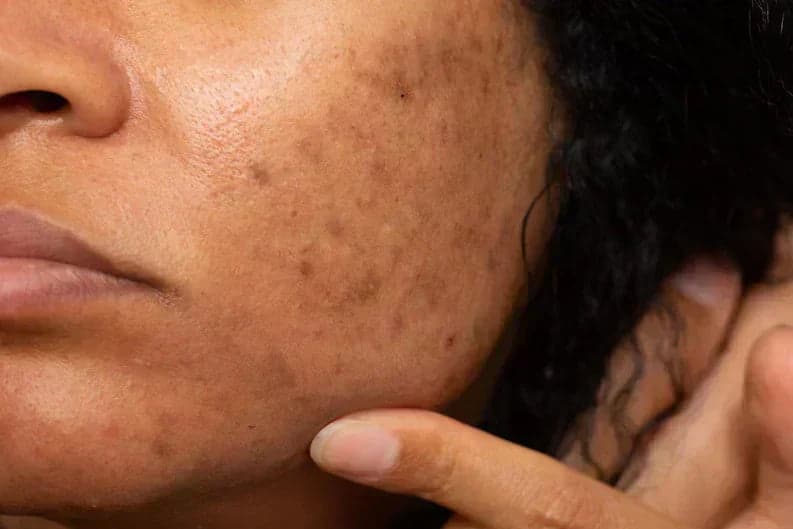
Pigment conditions also differ more than they look. According to a systematic review of natural products in melasma, melasma is a chronic, relapsing hypermelanosis with symmetric facial pigmentation and high recurrence rates, which is why a cream alone rarely finishes the job.[1] Sun spots and post-acne marks behave differently again.
So the honest answer to the 2% or 4% question starts with your actual skin rather than a number on a tube. Our hydroquinone page covers the ingredient itself in more detail.
Key takeaways
- Hydroquinone is a topical skin lightening agent used for melasma, post-inflammatory hyperpigmentation, dark marks and sun spots. It reduces pigment by slowing melanin synthesis inside the melanocyte.
- The 2% strength suits milder, more recent pigmentation, while 4% is prescription only in Australia and is generally kept for deeper or more persistent melasma.
- Higher concentrations bring more stinging, dryness and contact dermatitis, and long unsupervised courses carry a rare risk of exogenous ochronosis, so courses are cycled and reviewed.
- According to a systematic review of melasma, the condition is a chronic, relapsing hypermelanosis with high recurrence rates, so SPF 50+ sunscreen and maintenance matter as much as the cream itself.[1]
- A doctor can combine hydroquinone with retinoids, niacinamide or azelaic acid in a compounded formula where that is clinically appropriate.
Hydroquinone 2% vs 4%: What's the Difference?
The practical difference between the two strengths is access, pace and tolerability, not mechanism. Both suppress the same melanocyte enzyme and reduce melanin output, but 4% tends to clear moderate melasma faster while causing more dryness and stinging, and it needs a hydroquinone prescription in Australia. According to a systematic review of intradermal tranexamic acid, melasma research now spans a wide range of agents and concentrations, which tells you how much the field relies on matching dose to the individual rather than one fixed protocol.[2] Studies of adjunct options such as microneedling with tranexamic acid or vitamin C make the same point about combined approaches.[3]
The table below sets out how the two options compare in Australian practice, and it is the core of the decision between them.
| Feature | Hydroquinone 2% | Hydroquinone 4% |
|---|---|---|
| Access in Australia | Lower strength, limited availability | Prescription only after assessment by a doctor or dermatologist |
| Best suited to | Mild dark marks, freckles, early sun damage | Deeper melasma and stubborn post-inflammatory hyperpigmentation |
| Tolerability | Lower irritation risk, easier on sensitive skin | More redness and contact dermatitis; rare ochronosis with very long unsupervised use |
| Typical partner actives | Niacinamide, azelaic acid, kojic acid | Tretinoin and a low-strength corticosteroid in a compounded formula |
| Evidence context | Often compared against other topical agents in melasma trials[4] | Used as the comparator in combination melasma protocols[3] |
Neither strength is skincare you simply add to a routine. Where colour sits deeper, doctors tend to step up rather than stretch a weak course over many months.
Can Hydroquinone Clear Pigmentation Permanently or Just Fade It?
Hydroquinone fades pigmentation rather than removing it permanently, because it suppresses pigment production while you use it and does not change why your skin overproduces in the first place. According to a systematic review of natural products in melasma, melasma is a relapsing hypermelanosis with high recurrence rates, so return of colour after stopping is expected rather than a treatment failure.[1] Sun spots and post-acne marks behave a little better, since their trigger is usually finished once the injury or exposure stops.
Depth matters too. Epidermal pigment sitting near the surface responds faster than dermal pigment, which can look barely changed after a full course at either strength. Research into intradermal tranexamic acid shows why clinicians keep testing delivery routes for deeper melasma rather than simply raising a topical concentration.[2]
Maintenance is the part most people underestimate when comparing the two strengths. After an active course, doctors usually move patients onto a gentler holding plan using azelaic acid, niacinamide or vitamin C, plus daily sun protection, rather than continuous high-strength use. Evidence on adjunct treatments such as platelet-rich plasma found no significant advantage over control therapy for melasma severity, which is a useful reminder that not every add-on earns its place.[4]
Realistic framing helps: expect meaningful lightening of hyperpigmentation, expect to protect that result, and expect some pigment to drift back during an Australian summer. Our skin pigmentation creams guide covers the lower-intensity skincare options for that maintenance phase.
How Does Hydroquinone Lighten Dark Patches?
Hydroquinone lightens dark patches by blocking tyrosinase, the enzyme melanocytes use to build melanin. Less enzyme activity means less new pigment reaching the upper skin layers, so an existing patch fades gradually as those cells shed and are replaced. Nothing bleaches the skin instantly, and anything promising that is worth being suspicious of.
Overproduction usually starts with UV exposure, hormonal change, or inflammation after a breakout or injury. That is why a course to treat melasma also has to address the trigger, not just the colour. According to a systematic review of natural products in melasma, the condition is defined by symmetric facial pigmentation that recurs readily, which is exactly the pattern Australian doctors see returning each summer.[1]
Speed depends on where the pigment sits. Epidermal pigment can lighten within eight to twelve weeks, while dermal pigment resists topical treatment and may need a different approach altogether. Studies comparing microneedling with tranexamic acid or vitamin C reflect that same search for ways to reach pigment topical creams struggle with.[3]
Combination therapy is common for this reason, and it is part of the conversation about which strength to use. Adding tretinoin speeds cell turnover so pigmented cells clear faster, and a low-strength corticosteroid settles irritation. Marks left by acne respond well to this approach, though adjuncts need evidence behind them; platelet-rich plasma, for instance, showed no significant benefit over control in melasma.[4]
Which Hydroquinone Strength Suits Your Skin Tone?
Skin tone influences tolerance and risk more than it dictates a fixed concentration. Deeper skin tones produce more pigment per melanocyte and react to irritation by darkening, so an aggressive start can leave you worse off than when you began. That post-inflammatory response is the single most common reason a melasma course stalls.
For Fitzpatrick types IV to VI, doctors often begin lower, apply every second night, and build up. Lighter skin tolerates a faster ramp but sunburns more easily, which matters in Australia because unprotected UV re-stimulates melanocytes faster than any hydroquinone cream clears colour. Broad-spectrum SPF 50+ sunscreen every morning is not optional during treatment.
Where irritation is likely, a supporting acid such as azelaic acid can do useful work without the same inflammatory sting, and tretinoin can be dialled down rather than dropped. According to a systematic review of intradermal tranexamic acid in melasma, researchers have tested multiple concentrations including 4 mg/mL and 100 mg/mL, which underlines how much dose selection drives both response and tolerability.[2] Comparative work on microneedling with tranexamic acid versus vitamin C looked specifically at short-term tolerability alongside efficacy.[3]
One caveat worth naming: exogenous ochronosis, a blue-grey darkening, is reported mainly in deeper skin tones after prolonged unsupervised high-strength use. Our post on hydroquinone exogenous ochronosis covers the signs. Evidence that add-ons such as platelet-rich plasma did not outperform control therapy is another reason to keep plans simple and reviewed.[4]
Is Hydroquinone Safe, Including in Pregnancy?
Hydroquinone is legal in Australia, the 4% strength is prescription only, and it is not recommended during pregnancy or breastfeeding. Topical absorption is higher than for most cosmetic ingredients, and the safety data in pregnancy is too thin to justify the risk. Melasma often flares in pregnancy, which is frustrating timing, so our post on prescription skincare during pregnancy sets out the alternatives, with azelaic acid usually first on the list.
For everyone else, safety under supervision is the practical question. According to research on melasma as a chronic relapsing condition, treatment is a long-term management problem rather than a short fix, which is why courses are cycled instead of run indefinitely.[1] The usual side effects of hydroquinone use are local: redness, tightness, dryness, stinging and occasional contact dermatitis, and all are more frequent at 4% than 2%. Exogenous ochronosis is rare and concentrated in unregulated products applied for years without review.
Can You Buy Hydroquinone Over the Counter in Australia?
You cannot buy hydroquinone 4% over the counter in Australia. Pharmacy shelves carry cosmetic brightening products containing niacinamide, vitamin C or kojic acid, which is a different category entirely. Hydroquinone cream at therapeutic strength is dispensed on a doctor's authority, usually made up by a compounding pharmacy.
Getting it is straightforward enough. A GP can prescribe, and a dermatologist referral is rarely needed for uncomplicated pigmentation. Assessment matters because melasma, solar lentigines, post-inflammatory hyperpigmentation and drug-induced colour change all look brown from a distance but respond differently, and the efficacy of any plan depends on getting that diagnosis right.[3]
Two Australian access points people rarely hear about: hydroquinone is not PBS subsidised for pigmentation, so you pay privately whichever route you take, and overseas skin-lightening creams bought online often contain undeclared ingredients including mercury. Layering a strong retinoid on top of a new hydroquinone course also multiplies irritation, so a doctor will usually stagger them. Adjuncts should earn their place; platelet-rich plasma, for example, showed no significant improvement over control therapy in melasma.[4] Daily sunscreen remains the cheapest part of the plan and the one that protects your result.
Should You Start on 2% or 4% Hydroquinone?
Most people should start on the lower strength unless the pigmentation is deep, longstanding or has already failed gentler treatment. Hydroquinone 2 percent gives your skin a chance to show how it reacts before you commit to the concentration that causes more irritation. If a fortnight passes with no stinging or peeling, stepping up is a reasonable conversation.
Hydroquinone 4 percent tends to be the starting point when melasma is dense, symmetrical and has persisted through summers of good sun protection, or when a previous course with the lower concentration plateaued. A doctor or dermatologist will usually prescribe it as part of a compounded formula rather than alone, since combining a pigment blocker with a retinoid and an anti-inflammatory works on several steps at once.
Course length matters as much as strength. A typical hydroquinone cream course runs three to four months, then pauses for one to two months, which limits cumulative exposure and gives a checkpoint to judge whether hyperpigmentation is genuinely clearing. According to a systematic review of natural products, melasma's high recurrence rate means that checkpoint usually leads to a maintenance plan, not an open-ended script.[1]
If nothing has moved after a full supervised course, escalating is not automatically the answer. Sometimes the driver is hormonal, sometimes the pigment is dermal, and sometimes a supporting acid or a procedural option studied alongside topicals is the better next step.[2] Consistent daily sunscreen is what makes either strength worth starting, and our hyperpigmentation treatment page explains how that fits a longer plan.
How to Get Prescription Hydroquinone in Australia
You get prescription-strength hydroquinone in Australia by having a doctor assess your skin, in person or through a legitimate online consultation, and having the cream compounded. A GP can write the script; a dermatologist is usually reserved for pigmentation that has resisted treatment or where the diagnosis is unclear.
Expect questions about hormonal factors, the contraceptive pill, sun exposure, what skincare you already use, and whether earlier actives caused irritation. A doctor will want to know how the colour behaves across seasons, since mild pigmentation that fades each winter is managed differently from melasma that holds its ground all year. Photos of the affected area help, and a patch test is sensible if you have reacted to strong actives before.
A hydroquinone 2-4% formula is often compounded with tretinoin and niacinamide, and supporting agents such as kojic acid or azelaic acid can be swapped in where melanin suppression needs to continue with less sting. According to comparative melasma research, short-term tolerability is measured alongside efficacy for good reason, because a plan you cannot stick to does not work.[3] Adjunct therapies vary in evidence quality, and some show no advantage over control.[4]
At Prescription Skin you complete an online skin assessment reviewed by an Australian-registered doctor, who builds a personalised prescription formula where that is clinically appropriate. Approval depends on consultation and not everyone is suitable. Our frequently asked questions page explains how the service works.
Summary
Both strengths of hydroquinone act on the same enzyme, but 4% shifts colour faster and needs a doctor's oversight because local side effects rise with concentration and duration, while 2% suits milder, more recent pigmentation. Research describes melasma as a chronic relapsing condition, so maintenance and daily sun protection decide whether your result holds.[1] Comparative studies keep measuring tolerability alongside results for the same reason.[3] Prescription Skin follows a prescription skincare model: an online assessment, review by an Australian-registered doctor, and a compounded formula where clinically appropriate.
Frequently asked questions
Is 2% hydroquinone effective?
Hydroquinone 2% is an effective treatment for mild to moderate pigmentation, not just a cosmetic brightener. Used nightly and paired with daily sunscreen, it can visibly fade sun spots, freckles and post-acne marks over eight to twelve weeks. Deeper or longstanding melasma often needs a stronger or combined formula.
Does hydroquinone 4% need a prescription?
Yes, hydroquinone 4% requires a doctor's prescription in Australia and is not sold over the counter. It is usually dispensed through a compounding pharmacy after an assessment, because the higher concentration raises the chance of redness, dryness and contact dermatitis and needs review during the course.
Can a doctor prescribe hydroquinone 2% or 4% online?
Yes, an Australian-registered doctor can review your skin through an online assessment and decide between the strengths where prescribing is clinically appropriate. You submit photos and your medical history, and the doctor chooses the concentration and any combination ingredients. Approval is not automatic, and some patients are directed to non-prescription options instead.
What is the difference between hydroquinone and kojic acid?
Hydroquinone blocks tyrosinase directly and is the stronger pigment suppressant, while kojic acid is a milder cosmetic-grade agent available without a prescription. Kojic acid suits maintenance after a course or sensitive skin that cannot tolerate hydroquinone, but it generally works more slowly on established pigmentation.
Which type of hydroquinone is best?
The best type is the lowest concentration that clears your pigmentation within a defined course. For most people that means starting at 2%, reserving 4% for deeper melasma, and using a compounded formula with tretinoin and niacinamide when a single agent has already plateaued.
Does pigmentation come back after hydroquinone?
Pigmentation commonly returns after hydroquinone, particularly melasma. According to a systematic review, melasma is a relapsing condition with high recurrence rates, so most people move onto a maintenance plan with azelaic acid or niacinamide plus SPF 50+ rather than stopping treatment entirely.[1] Our melasma treatment page explains long-term management.
References
- Morais MT, Gonçalves TLN, de Paula Soares L, Sato AFQ, Oliveira Júnior RG, Silva Almeida JRGD. Efficacy of natural products in the treatment of melasma: A systematic review. Biomedicine & pharmacotherapy = Biomedecine & pharmacotherapie. 2026. doi:10.1016/j.biopha.2026.119763. PubMed ↩︎
- Piras M, Bigotto GD, Galadari H, Proietti I, DI Brizzi EV, Paganelli A. Intradermal tranexamic acid and melasma: a systematic review and level of evidence. Italian journal of dermatology and venereology. 2026. doi:10.23736/S2784-8671.26.08528-2. PubMed ↩︎
- Roddaje T, Saowarat S, Norchai P. Efficacy and safety of microneedling with tranexamic acid versus microneedling with vitamin C in the treatment of melasma: a systematic review and meta-analysis. Journal of medicine and life. 2026. doi:10.25122/jml-2026-0051. PubMed ↩︎
- Ma C, Wang Q, Zhang L. The Efficacy and Safety of Platelet-Rich Plasma in the Treatment of Melasma: A Systematic Review and Meta-analysis. Aesthetic plastic surgery. 2026. doi:10.1007/s00266-026-05946-5. PubMed ↩︎
Medically Reviewed Content
- Written by: Prescription Skin Editorial Team
- Medically Reviewed by: Dr Mitch Bishop - AHPRA Registered Practitioner (MED0002309948)
- Last Updated: September 2026
This content is for informational purposes only and does not constitute medical advice. Treatment is subject to consultation and approval by our Australian-registered doctors.
Part of our ingredient guide
Hydroquinone →