Retinol purging catches almost everyone off guard. You start a new retinoid hoping for clearer skin, and instead you get a fresh crop of breakouts, some redness and a bit of flaking in the first few weeks. It looks like the product is making things worse. In most cases, though, retinol purging is a sign the retinoid is doing its job. Retinoids are vitamin A derivatives that speed up the rate your skin cells renew, which pushes oil, dead cells and existing congestion to the surface sooner than they would have appeared on their own.[1] That faster turnover is what causes the short-lived flare. The good news is that this phase is temporary and tends to settle once your skin adapts. Knowing what purging looks like, how long it lasts and how to tell it apart from a genuine reaction makes the difference between giving up too early and getting the result you started for.
Key takeaways
- Retinol purging is a temporary flare of breakouts, redness and flaking that usually runs for about 2 to 6 weeks while your skin adjusts to a new retinoid.[2]
- Purging happens because retinoids speed up cell turnover and bring already-forming congestion to the surface faster, so spots cluster where you normally break out.[1]
- An adverse reaction is different: it can appear anywhere, often involves stinging, hives or swelling, and does not settle while you keep using the product.
- You can ease the adjustment by starting at a low strength, applying it at night, moisturising well and wearing daily sunscreen.
- Prescription retinoids such as tretinoin, which needs a doctor's prescription in Australia, can flare harder at first but tend to give stronger results for acne and hyperpigmentation.
What Is Retinol Purging, Exactly?
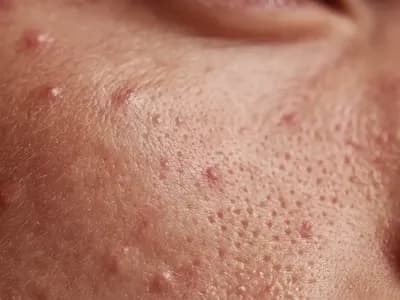
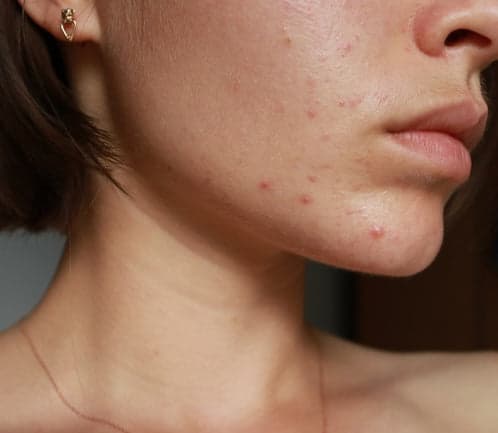
Retinol purging is the short-lived flare-up that can happen at the start of retinoid treatment, before your skin settles and improves. When a retinoid speeds up cell turnover, congestion that was already forming deeper in the pores surfaces faster, so you see more whiteheads, blackheads and small spots than usual. According to Kolli and colleagues, this initial flare is a well-documented part of starting topical retinoids and is distinct from an allergic response.[2] The simplest way to tell the two apart is location and behaviour: purging clusters where you normally break out and fades over a few weeks, while a true reaction can appear anywhere and keeps going. The table below sets out the key differences.
| Feature | Retinol purging | Adverse reaction |
|---|---|---|
| Where it shows up | Areas you usually break out, like the acne-prone chin and forehead | Anywhere, including new spots |
| What you see | Whiteheads, blackheads, small blemishes, some flaking | Hives, swelling, widespread redness |
| How it feels | Mild irritation and tightness on sensitive areas | Burning, stinging, persistent itch |
| Timing | Settles in roughly 2 to 6 weeks | Persists until the product is stopped |
| What to do | Keep going, slow the frequency, add a soothing serum with niacinamide | Stop the product and speak to a doctor |
According to Narsa and colleagues, the early irritation that comes with this phase, including peeling and tightness, reflects how the retinoid acts on the skin and generally eases as tolerance builds.[3] Mechanistic reviews confirm this turnover effect sits at the heart of how retinoids work in skincare.[4][5]
How Does Retinol Trigger a Skin Purge?
A retinol purge happens because the active speeds up cell turnover, and that faster renewal brings forming spots to the surface sooner.[1] Think of a retinol purge as compressing weeks of slow congestion into a shorter window. Microcomedones that would have surfaced gradually over a month or two all break through at once, which is why the skin looks worse before it looks better. That is the difference between a retinol purge and an ordinary breakout: a purge is concentrated, predictable and tied to starting the product, rather than random.
The retinol purge also drives some peeling as old surface cells shed faster than usual. Going gentle here matters. Layering scrubs or extra acids on top while the skin is already turning over quickly tends to make the flare harsher rather than shorter, so a stripped-back routine usually serves you better through the early weeks of any retinol purge.
How Do You Ease Discomfort During a Purge?
The most useful thing you can do during a purge is protect your skin barrier and resist the urge to overcorrect. Apply your retinoid at night on dry skin, follow with a richer moisturiser, and stick to a gentle cleanser in the morning. If a breakout flares hard or the dryness gets uncomfortable, drop the retinoid back to every second or third night rather than stopping altogether, because stopping and restarting just resets the purge from scratch.[1]
Avoid piling on exfoliating acids, scrubs or fresh actives until the purge settles, since stacking them tends to worsen redness and flaking. Ingredients like hyaluronic acid and niacinamide help calm the skin and ease dryness without adding irritation. Daily sunscreen of at least SPF 30 is non-negotiable while you push through a purge, as retinoids raise sun sensitivity.
How Long Does Purging Last in Your Routine?
Purging usually lasts between two and six weeks, which lines up with roughly one full skin cell turnover cycle of about 28 to 40 days. Most people notice the flare easing around the four to six week mark as fresh, healthy cells replace the older congested ones.[5] How long it runs depends on the strength of the retinoid and how your skin responds, so two people on the same routine can have quite different experiences.
With a lower-strength over-the-counter retinol, the flare and irritation tend to be milder but slower to clear the underlying congestion. According to Balado-Simo and colleagues, prescription tretinoin can cause a more pronounced initial flare, yet the clinical results for acne and ageing are significantly better with continued use.[4] That trade-off is the honest reality of retinoids: the more potent the vitamin A derivative, the bigger the early adjustment can be.[2]
If your skin is still flaring past the eight to ten week mark, that is your cue to reassess rather than wait it out. Either the strength is too high for your tolerance, another active is irritating things, or what you are seeing is not purging at all. Narsa and colleagues note that adjusting formulation and frequency reduces this irritation while keeping the benefit.[3] A doctor can fine-tune a prescription acne routine or step it down so you keep progressing. Our guide on the first 8 weeks on prescription skincare walks through what each stage tends to look like.[1]
Is Retinol Right for Your Skin Type?
Retinol suits most skin types, but how you start matters more than whether you can use it at all. Oily and congestion-prone skin often tolerates a retinoid quickly and sees blackheads surface during the early turnover phase. Drier or reactive skin tends to feel the dryness and irritation more, so a slower introduction and a richer moisturiser help a lot.[3]
Some conditions call for extra care before adding any vitamin A derivative. If you have rosacea or a barrier that flares easily, a retinoid can aggravate things unless the strength and supporting ingredients are chosen carefully.[1] This is where doctor-led skincare earns its place. A doctor can match the retinoid concentration to your tolerance and pair it within a prescription formula so the adjustment is workable rather than miserable. Comparing the strengths is easier with our retinol vs tretinoin guide.
How Do You Handle Retinol Side Effects?
Most retinoid side effects come down to irritation, and you handle them by supporting the skin rather than abandoning the treatment. According to Narsa and colleagues, the common early effects are peeling, redness, tightness and stinging, and these usually fade as your skin builds tolerance.[3] Slowing the frequency, using a bland moisturiser and avoiding other strong actives covers the side of things most people struggle with.
Pigment is the other issue worth flagging. When a breakout heals, it can leave a dark mark, especially in deeper skin tones, and this post-inflammatory pigmentation is easy to mistake for the spot itself. According to Callender and colleagues, retinoids actually help fade that pigmentation while they treat the underlying renewal problem.[6] For sensitive skin or persistent marks, a doctor can build a prescription serum that combines the right vitamin A strength with ingredients like vitamin C or niacinamide to settle redness and even out tone together.[1]
Summary
Retinol purging is the temporary flare of breakouts, redness and flaking that can follow starting a retinoid, driven by faster cell turnover and usually settling within two to six weeks.[4][2] Prescription Skin works on a doctor-led prescription model, where Australian-registered doctors assess your skin online and, where clinically appropriate, build a personalised prescription formula with a retinoid strength your skin can actually tolerate.
Frequently asked questions
How long does purging with retinol last?
Purging with retinol typically lasts about two to six weeks, roughly one full skin cell turnover cycle. Most people notice the flare easing around the four to six week mark as fresh cells replace the older congested ones. If breakouts are still worsening past two months, that is worth reviewing with a doctor.
Does purging mean retinol is working?
Often, yes. Purging is a sign the retinoid is speeding up renewal and clearing congestion to the surface faster than usual, which is exactly the mechanism that improves the skin over time. The flare looks worse before it looks better, but it generally points to the treatment doing its job.[1]
Can a doctor help with retinol purging?
A doctor can confirm whether what you are seeing is genuine retinol purging or an adverse reaction, then adjust the strength or frequency and pair the retinoid with soothing ingredients in a prescription formula.[1] That review matters because a true reaction means stopping the product, while purging means staying the course. If the flare is not settling past the expected window, a doctor can step the routine down so you keep progressing rather than wasting weeks on a strength your skin cannot tolerate.
How to get rid of purging from retinol?
You do not get rid of purging so much as ease it: slow the retinoid to every second or third night, keep the routine simple, moisturise well and use daily sunscreen. Avoid stacking exfoliating acids or scrubs on top, since that tends to worsen the flare rather than shorten it.
How long are retinol uglies?
The so-called retinol uglies, the rough patch of spots and flaking, usually run for the same two to six week window as purging and can occasionally stretch towards two months with stronger formulas. Sticking with the routine and supporting the barrier is what gets you through it fastest.
What is retinol?
Retinol is a vitamin A derivative used in skincare to speed up skin cell turnover, which helps clear blocked pores, soften fine lines and wrinkles and even out tone. Prescription-strength forms such as tretinoin are more potent and need a doctor's prescription in Australia.
References
- Xia Y, et al. Dynamic Multi-Omics Mechanisms Underpinning Retinol Intolerance in Skincare: A Prospective Longitudinal Study. Front Microbiol. 2025;16:1668712. 2025. ↩︎
- Kolli SS, Pecone D, Pona A, Cline A, Feldman SR. Topical Retinoids in Acne Vulgaris: A Systematic Review. Am J Clin Dermatol. 2019;20(3):345-365. 2019. ↩︎
- Narsa AC, Suhandi C, Afidika J, et al. A Comprehensive Review of the Strategies to Reduce Retinoid-Induced Skin Irritation in Topical Formulation. Dermatol Res Pract. 2024;2024:5551774. 2024. ↩︎
- Balado-Simo P, Morgado-Carrasco D, Gomez-Armayones S, et al. An Updated Review of Topical Tretinoin in Dermatology: From Acne and Photoaging to Skin Cancer. J Clin Med. 2025;14(22):7958. 2025. ↩︎
- Dreno B, Kang S, Leyden J, York J. Update: Mechanisms of Topical Retinoids in Acne. J Drugs Dermatol. 2022;21(7):734-740. 2022. ↩︎
- Callender VD, Baldwin H, Cook-Bolden FE, et al. Effects of Topical Retinoids on Acne and Post-inflammatory Hyperpigmentation in Patients with Skin of Color. Am J Clin Dermatol. 2022;23(1):69-81. 2022. ↩︎
Medically Reviewed Content
- Written by: Prescription Skin Editorial Team
- Medically Reviewed by: Dr Mitch Bishop - AHPRA Registered Practitioner (MED0002309948)
- Last Updated: June 2026
This content is for informational purposes only and does not constitute medical advice. Treatment is subject to consultation and approval by our Australian-registered doctors.