
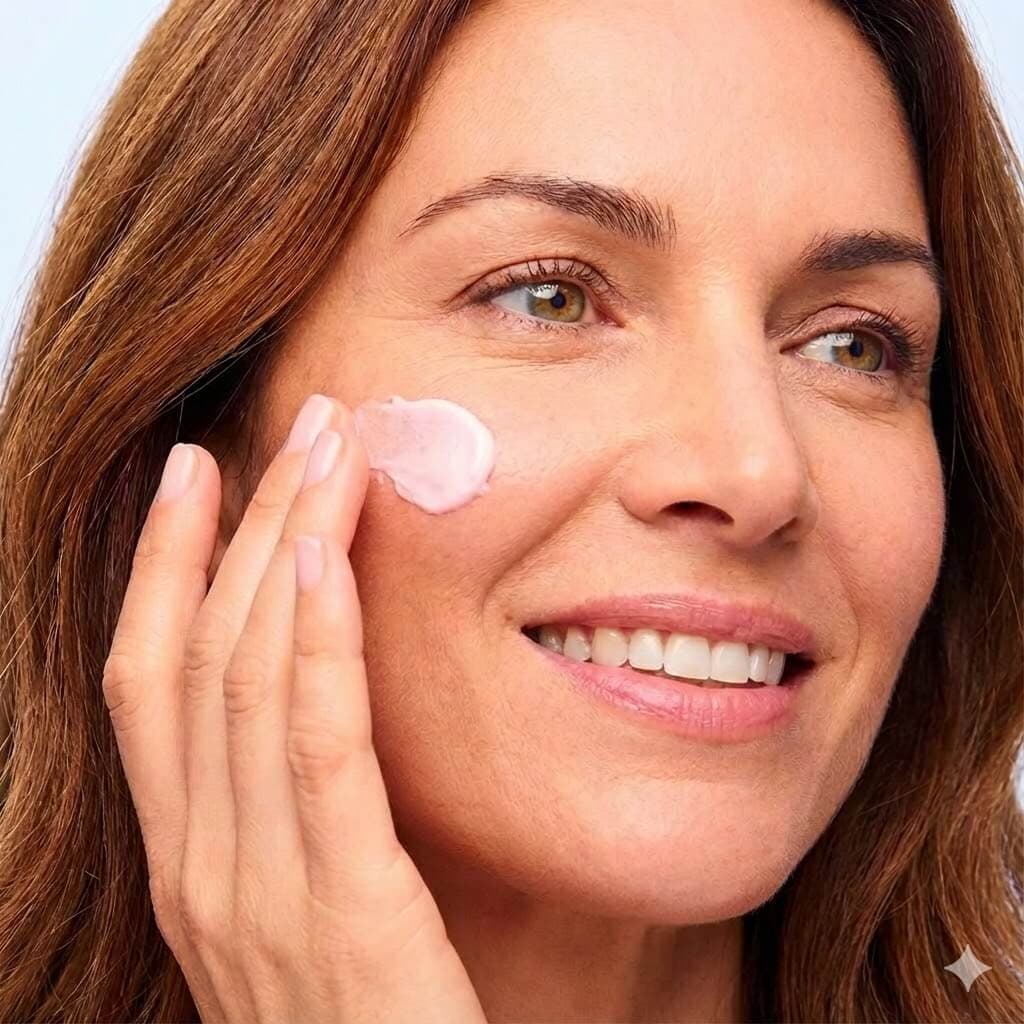
There is a reason beauty sleep is not just a myth. While you rest, your body goes into repair mode, and your skin is no exception. This makes the evening the absolute best time to apply active ingredients, especially if your goal is a more even, radiant complexion. If you are searching for a night cream for skin brightening, you are likely trying to tackle dullness, sun damage, or persistent uneven tone.
However, "brightening" is a term that gets thrown around loosely in the skincare aisle. Real skin brightening isn't about bleaching your natural skin colour; it is about fading hyperpigmentation, reducing redness, and speeding up cell turnover to reveal fresh, healthy skin cells. This guide will break down the science of nightly repair, which ingredients actually work, and how prescription formulations differ from the jars you find at the supermarket.
Key takeaways
- Night is for repair: Your skin is more permeable at night and not fighting UV rays, making it the safest and most effective time to use potent brightening actives.[1]
- Ingredients matter: Look for Tyrosinase Inhibitors (like hydroquinone or azelaic acid) to stop pigment production, and cell communicators (like retinoids) to speed up turnover.[2]
- Prescription strength differs: Over-the-counter brightening creams are limited in strength. Prescription formulas can combine higher percentages of actives for stubborn melasma or sun spots.[3]
- Sunscreen is non-negotiable: Using a night cream for skin brightening without using SPF the next morning will undo your progress and potentially worsen pigmentation.[4]
Comparing brightening ingredients
| Ingredient Family | How it brightens skin | Best for |
|---|---|---|
| Tyrosinase Inhibitors (Hydroquinone, Kojic Acid) | Stops the enzyme that creates melanin (pigment) in the first place. | Melasma, dark spots, sun damage. |
| Cell Communicators (Retinoids, Tretinoin) | Speeds up cell turnover, shedding pigmented cells faster. | Overall dullness, texture, acne marks. |
| Antioxidants (Vitamin C, Niacinamide) | Blocks pigment transfer and prevents oxidation darkening. | General radiance, redness, prevention. |
| Exfoliants (AHAs, Azelaic Acid) | Dissolves the "glue" holding dead, dull cells to the surface. | Surface brightness, immediate glow. |
Why night is the right time for brightening
You might wonder why we don't just use these creams in the morning. The answer lies in your skin's circadian rhythm. Research shows that skin permeability increases at night, meaning ingredients can penetrate deeper. Furthermore, blood flow to the skin increases in the evening, aiding in the delivery of nutrients and the removal of toxins.[1]
More importantly, many of the heavy-hitting ingredients found in a prescription night cream for skin brightening are photosensitive. Ingredients like retinoids breaks down when exposed to sunlight, rendering them less effective. Others, like certain acids, thin the outermost layer of the skin, making you more susceptible to sunburn. By applying them before bed, you allow the ingredients to work undisturbed in the dark.
Key ingredients in a brightening night cream
When analyzing the label of a night cream or discussing a custom formula with a doctor, these are the ingredients that do the heavy lifting.
1. Retinoids (Tretinoin and Retinol)
Retinoids are the gold standard for a reason. By accelerating cellular turnover, they force old, pigmented cells to shed and be replaced by fresh, unpigmented cells from deeper in the epidermis. While over-the-counter retinol is popular, prescription strength tretinoin is significantly more potent and faster-acting for brightening.[2] You can read more about the difference in our guide to retinol vs tretinoin.
2. Hydroquinone
Often found in prescription compounds, hydroquinone is a tyrosinase inhibitor. It effectively tells your melanocytes (pigment cells) to stop producing excess melanin. It is considered one of the most effective agents for treating melasma. Because it is powerful, it is usually prescribed in cycles (e.g., 3 months on, 1 month off) to ensure safety.[3]
3. Niacinamide (Vitamin B3)
This is the gentle giant of skincare. Niacinamide stops the transfer of pigment from the melanocyte to the visible skin cell. It also strengthens the skin barrier and reduces inflammation, which is vital because inflammation often triggers pigmentation (known as Post-Inflammatory Hyperpigmentation, or PIH).[5]
4. Azelaic Acid
A fantastic option for those with rosacea or acne-prone skin. It targets abnormal pigment production without affecting normal skin, making it a safe brightening choice that doesn't usually cause halo-hypopigmentation (white spots around the dark spot).[6]
The difference between OTC and Prescription night creams
If you walk into a pharmacy, you will find hundreds of jars promising to "brighten" and "glow." These Over-the-Counter (OTC) products generally rely on lower concentrations of actives like Vitamin C, low-dose retinol, or mild exfoliating acids. They are formulated to be safe for the general population without medical supervision, which means they are often less potent.
A prescription night cream for skin brightening is different. At Prescription Skin, our doctors can prescribe compound creams that combine multiple high-strength ingredients into a single bottle. For example, a common compound might mix Tretinoin (for turnover), Hydroquinone (to stop pigment), and a mild steroid (to reduce irritation). This multi-modal approach attacks pigmentation from several angles at once, often yielding results that OTC products simply cannot match.
How to use a brightening night cream safely
Potent ingredients require respect. Rushing into a brightening routine can damage your barrier, leading to inflammation which—ironically—can cause more pigmentation.
- Cleanse Gently: Remove the day’s sunscreen, makeup, and pollutants. A clean canvas helps your night cream penetrate.
- Apply to Dry Skin: If you are using prescription retinoids or strong actives, wait 5-10 minutes after washing for your skin to dry completely. Damp skin absorbs product faster, which can increase irritation.
- The Pea-Sized Rule: You do not need a thick layer. A pea-sized amount is usually enough for the whole face.
- Moisturise: If your brightening cream doesn't contain enough emollients, follow up with a barrier-repairing moisturiser containing ceramides or hyaluronic acid.
- Morning Protection: This is the most critical step. You must use a broad-spectrum SPF 50+ every single morning. Brightening agents exfoliate the skin and reduce melanin, removing your natural (albeit weak) protection against the sun.[4]
If you are new to these ingredients, you might experience "purging" or mild dryness. Our first 8 weeks guide covers what to expect when starting a medical-grade routine.
Special considerations: Pregnancy and Sensitive Skin
Not all brightening ingredients are safe for everyone. If you are pregnant or breastfeeding, ingredients like Hydroquinone and Tretinoin are generally contraindicated. However, that doesn't mean you have to deal with the "mask of pregnancy" (melasma) untreated. Azelaic acid and low-dose AHA formulations are often considered safer alternatives.[6] You can read more in our guide to prescription skincare during pregnancy.
For those with very sensitive skin, the goal is to brighten without inflammation. We often recommend the "sandwich method" (moisturiser -> active -> moisturiser) or starting with ingredients like Niacinamide before graduating to stronger acids or retinoids.
Summary
Finding the right night cream for skin brightening is about understanding your skin's specific needs. While OTC creams offer a gentle boost, persistent pigmentation and dullness often require the targeted power of prescription ingredients. By utilising the skin's natural nightly repair cycle and combining tyrosinase inhibitors with cell turnover agents, you can achieve a clearer, more even complexion.
If you are unsure which ingredients are right for you, or if you have tried store-bought creams with little success, it may be time to consult a doctor. Our team can assess your skin online and create a custom treatment plan delivered to your door.
References
- Lyons AB, Moy L, Moy R, Tung R. Circadian Rhythm and the Skin: A Review of the Literature. Journal of Clinical and Aesthetic Dermatology. 2019;12(9):42-45. ↩︎
- Mukherjee S, Date A, Patravale V, et al. Retinoids in the treatment of skin aging: an overview of clinical efficacy and safety. Clinical Interventions in Aging. 2006;1(4):327-348. ↩︎
- Schwartz C, Jan A, Zito PM. Hydroquinone. [Updated 2023 Aug 28]. In: StatPearls [Internet]. Treasure Island (FL): StatPearls Publishing; 2024 Jan-. ↩︎
- Sander M, Sander M, Burbidge T, Beecker J. The efficacy and safety of sunscreen use for the prevention of skin cancer. Canadian Medical Association Journal. 2020;192(50):E1802-E1808. ↩︎
- Hakozaki T, Minwalla L, Zhuang J, et al. The effect of niacinamide on reducing cutaneous pigmentation and suppression of melanosome transfer. British Journal of Dermatology. 2002;147(1):20-31. ↩︎
- Hollinger JC, Angra K, Halder RM. Are Natural Ingredients Effective in the Management of Hyperpigmentation? A Systematic Review. Journal of Clinical and Aesthetic Dermatology. 2018;11(2):28-37. ↩︎
Medically Reviewed Content
- Written by: The Prescription Skin Editorial Team
- Medically Reviewed by: Dr Mitch Bishop AHPRA Registered Practitioner (MED0002309948)
- Last Updated: January 2026
This content is for informational purposes only and does not constitute medical advice. Treatment is subject to consultation and approval by our Australian-registered doctors.